
Product system
VFD Houses for Drilling Rigs
Delivering customized turnkey solutions for your power requirements
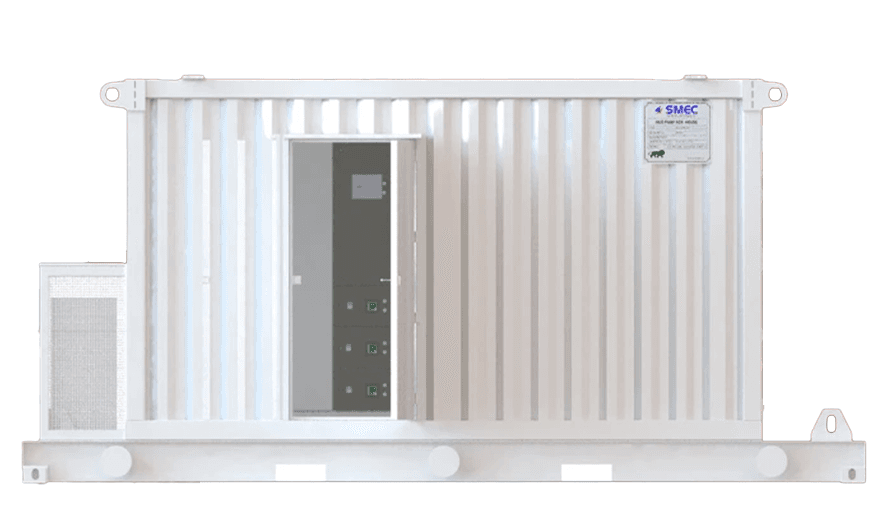
A VFD House packages variable-frequency drives, power/control distribution, cooling/ventilation, protection and control interfaces for drilling and auxiliary motors. SMEC can engineer replacement or new-build VFD packages around motor data, duty cycle, harmonics/project requirements, existing control interfaces and transport constraints.
01Overview
About the VFD Houses
The customization of the systems for designing shall be undertaken with the customer input for completing a user-friendly system that can be made in a scalable architecture. We also support for optimization of user requirements in respect to distribution panels, orientation and handling capability viz. top lifted, skidded, or trailer mounted as per the drilling contractor’s site layout and transportation methodology. The system offers superior performance and control for drilling operations with optimal monitoring systems.
Operating range
- System voltage
- 380 V to 600 V AC
01Why SMEC?
- Advanced AC variable frequency drives (VFD) with integral dV/dT filters for compatibility with draw works, top drive and mud pumps
- Generator controls for automatic breaker closing synchronization and load sharing
- Programmable Logic Controllers (PLCs) and communication networks for ease of operation
- Formed wall construction with insulation in walls, ceiling, and under skid
- Variety of transportation characteristics (skid mounted, top lifted, or trailer mounted)
- Covered and protected subfloor wiring with removable plates and rubber matting
- HVAC systems rated and designed for 100% sensible heat loads
- Greater dynamic braking and rectifier capacity for longevity
- Includes remote input/output boxes and critical sensors
- Two personnel doors with convenient, foldable steps
- Porch mounted equipment includes power and lighting transformers, VFD dynamic braking resistors
- Streamlines energy delegation and conversion for reliable service
02Engineering detail
Engineering detail
VFD Houses Engineered Around the Motor, the Load and the Site
A VFD house brings variable-speed power conversion, cooling, protection and control into one engineered package. The right solution begins with the driven equipment, motor insulation, cable length, harmonics and available utility or generator power—not the enclosure dimensions.
Technical scope / product architecture
- Project-approved VFDs
- Input/output switching and protection
- Drive control and PLC/HMI interfaces
- Cooling/HVAC
- Motor and field interface engineering
- PMS/SCADA integration where required
- FAT and commissioning
What SMEC adds
Engineering, interface definition, panel/package build, software/configuration where applicable, FAT, site installation support, SAT/commissioning and lifecycle support.
How it works
Drive selection — The motor torque-speed curve, overload duration, operating speed range and supply characteristics determine whether LV or MV VFD architecture is appropriate.
Power quality — Input harmonics, generator interaction, DC-link energy and switching transients are addressed through appropriate transformer, filtering and drive topology.
Motor interface — Output filters, insulation stress, motor cable length, grounding and common-mode currents are assessed to avoid premature motor or bearing problems.
Thermal management — Drive losses, ambient temperature, ventilation paths and cooling redundancy determine enclosure/HVAC design.
Key components
MV/LV drive selection. The mv/lv drive selection is selected for the equipment, operating duty and site conditions.
Input transformer and switchgear. Transformer impedance, winding arrangement, cooling, insulation class and protection must suit the upstream fault level and downstream conversion equipment.
Line reactors and harmonic filters. The line reactors and harmonic filters is selected for the equipment, operating duty and site conditions.
Braking and regeneration. The braking and regeneration is selected for the equipment, operating duty and site conditions.
Motor protection. Protection settings, trip contacts and fault discrimination must coordinate with upstream and downstream equipment and be demonstrated during testing.
HVAC and heat extraction. The hvac and heat extraction is selected for the equipment, operating duty and site conditions.
PLC/HMI interface. PLC/HMI functions present status, operating modes, permissives, faults and event history. Commands and safety-related shutdown functions must remain correctly separated.
Bypass and redundancy. The bypass and redundancy is selected for the equipment, operating duty and site conditions.
Upgrades & retrofits
Replace obsolete drives while retaining compatible transformers, motors and switchgear after interface verification.
Add remote drive diagnostics, thermal monitoring and coordinated fault logging.
Assess active front-end, harmonic mitigation and regeneration options against the power network.
Retrofit scope depends on existing OEM interfaces, component condition, available space, shutdown windows and the approval basis of any safety-related functions.
Applications
- Onshore drilling
- Offshore drilling
- Pumps
- Compressors
- Marine machinery
Testing & documentation
Relevant IEC, ISO, API, classification-society, hazardous-area or functional-safety requirements must be selected according to the specific system and installation. Where applicable, the project package may include electrical drawings, GA layouts, datasheets, I/O schedules, cause-and-effect, communication lists, inspection records, FAT/SAT procedures, calibration records and as-built documents. No unverified compliance certification is claimed here.
03More from the range
Other SMEC systems
Every system is built to the rig it serves and integrated with the rest of the installation.
- Power HousesPCR House | SCR House | VFD HouseKnow More
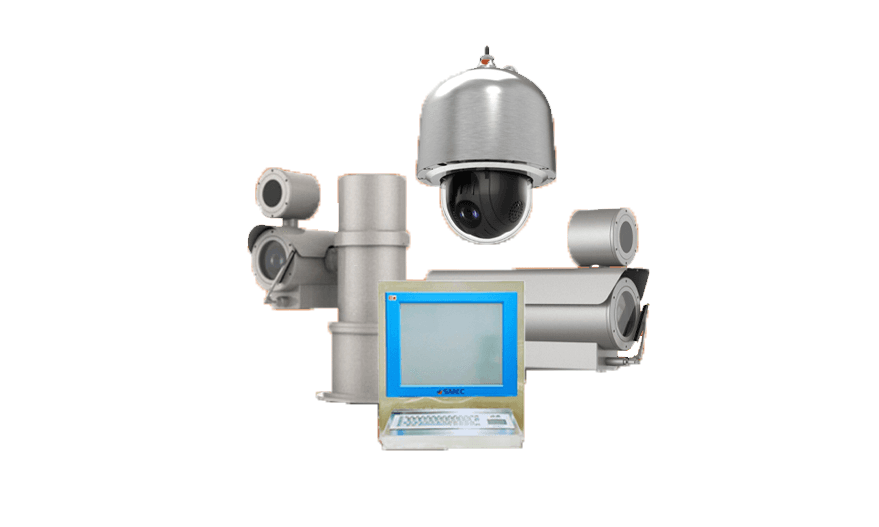 Advanced Perimeter Security SystemSecure Your Boundaries with SMEC's Advanced Perimeter Security System!Know More
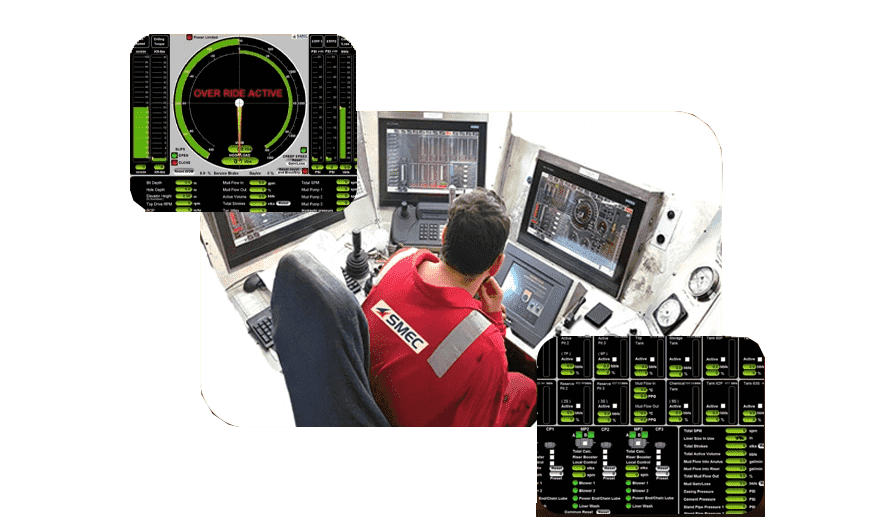 Drill Monitor SystemStay Alert, Stay Safe: Gas Watch Panel by SMECKnow More
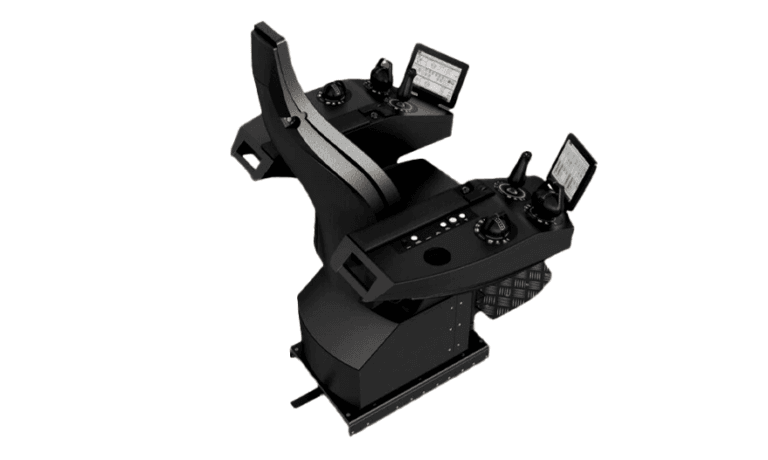 Integrated Drilling Control SystemElevate Your Drilling: Precision Meets Innovation with SMEC’s Integrated Control System!Know More
Common questions
Can VFD Houses for Drilling Rigs be supplied for new build, retrofit or replacement?
The lifecycle route depends on the installed base, condition, interfaces, obsolescence and project requirements. SMEC can assess new-build, retrofit, repair or replacement scope where technically valid.
Can existing field wiring or interfaces be retained?
Possibly. Retention depends on survey findings, condition, ratings, compatibility, safety requirements, documentation and the cutover strategy.
What information is required for quotation?
Send the make/model or required specification, datasheets, drawings, ratings, interfaces, fault details where applicable, site location and required date or shutdown/mobilization window.
When should an SCR rig consider a VFD conversion?
When lifecycle cost, motor replacement, controls, spare parts and power quality justify a system-level upgrade.
Can the VFD house be supplied as a packaged unit?
Yes, subject to transport, site access, cooling and project specification.
What determines VFD size?
Motor data, duty cycle, overload requirement, ambient conditions and driven-machine torque.
Related pages
Send the requirement
Send the available drawings, specification, make and model, site and required date. An engineer reviews the scope and replies.