
Product system
RPD System
Precise control for jack-up rigs
RPD monitoring provides information on relative rack/pinion loading behaviour during jacking so operators can identify unequal loading conditions that require attention. SMEC can integrate RPD measurement, displays, alarms and jacking-control interfaces as project-defined.

01Overview
About the RPD System
Among the three legs of a jack-up rig each individual leg consists of three daisy wheel sensors for each chord. This adds to a total of nine for a single jack-up rig.
Sensing
- Legs monitored
- Three
- Sensors per leg
- Three daisy wheel sensors, one per chord
- Sensors per rig
- Nine
01Why SMEC?
- Avoids leg over stresses
- Speeds up deployment and recovery safely
- Eliminates risks of damage
- HMI for easy monitoring and control operation
- Graphical representations with precise indication and numerical values
- Alarm information can be generated
- Data can be recovered from trends
- New, retrofit or repair can be done
- Manufactured and commissioned for easy operations
- Automation control systems installed for smooth operations
- Individual motors working in required torque settings
- IO points and remote IO racks
02Engineering detail
Engineering detail
See Rack Phase Difference Before It Becomes a Jacking Problem
Rack Phase Difference (RPD) monitoring supports awareness of relative rack positions in jack-up jacking arrangements. Engineering starts with the actual leg, rack and pinion configuration, measurement method and OEM-defined operating limits.
Technical scope / product architecture
- RPD sensing/interface architecture
- Leg/rack channel monitoring
- Display and alarm logic
- Jacking-control integration
- Trend/history where required
- Retrofit engineering
What SMEC adds
Engineering, interface definition, panel/package build, software/configuration where applicable, FAT, site installation support, SAT/commissioning and lifecycle support.
How it works
Measurement principle — RPD monitors relative rack displacement/phase within jack-up jacking arrangements, using position measurement and rig-specific geometry.
Display and alarms — Differences can be displayed, trended and alarmed; allowable thresholds are established by the jack-up OEM/design authority.
Integration — RPD data may interface with the jacking controller, but its protective authority must be explicitly defined.
Sensor assurance — Sensor mounting, calibration, resolution and signal-loss detection determine the credibility of the displayed difference.
Key components
Position measurement interfaces. The position measurement interfaces is selected for the equipment, operating duty and site conditions.
Rack difference calculation. The rack difference calculation is selected for the equipment, operating duty and site conditions.
Operator display. The operator display is selected for the equipment, operating duty and site conditions.
Alarm thresholds. Alarm thresholds, priorities, delays and operator actions must be documented to avoid nuisance alarms and missed critical events.
Event logging. The event logging is selected for the equipment, operating duty and site conditions.
Jacking PLC interface. Leg position, drive groups, brake logic and mechanical limits must be evaluated together; the control upgrade cannot substitute for mechanical condition assessment.
Sensor diagnostics. Sensor technology, range, accuracy, location and calibration interval are selected from the physical variable and operating environment.
Upgrades & retrofits
Renew ageing position sensors and calibrate against known references.
Introduce trend and event history to support jacking investigations.
Connect RPD alarms to the jacking HMI under a documented interface agreement.
Retrofit scope depends on existing OEM interfaces, component condition, available space, shutdown windows and the approval basis of any safety-related functions.
Applications
- Jack-up rigs
- Jacking control upgrades
- Rig reactivation
Testing & documentation
Relevant IEC, ISO, API, classification-society, hazardous-area or functional-safety requirements must be selected according to the specific system and installation. Where applicable, the project package may include electrical drawings, GA layouts, datasheets, I/O schedules, cause-and-effect, communication lists, inspection records, FAT/SAT procedures, calibration records and as-built documents. No unverified compliance certification is claimed here.
03More from the range
Other SMEC systems
Every system is built to the rig it serves and integrated with the rest of the installation.
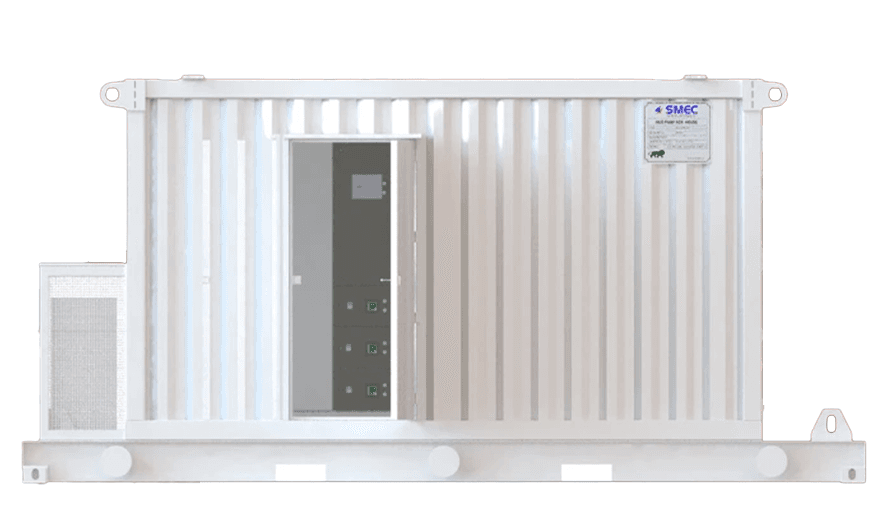 Power HousesPCR House | SCR House | VFD HouseKnow More
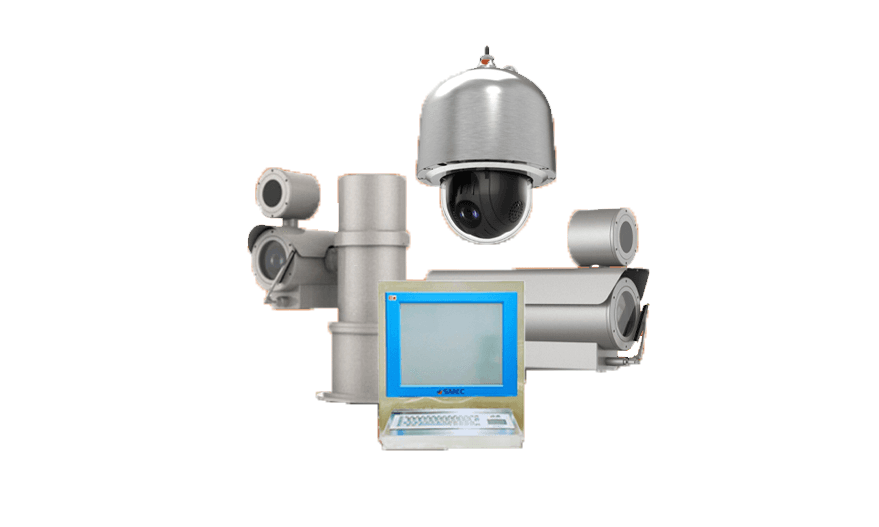 Advanced Perimeter Security SystemSecure Your Boundaries with SMEC's Advanced Perimeter Security System!Know More
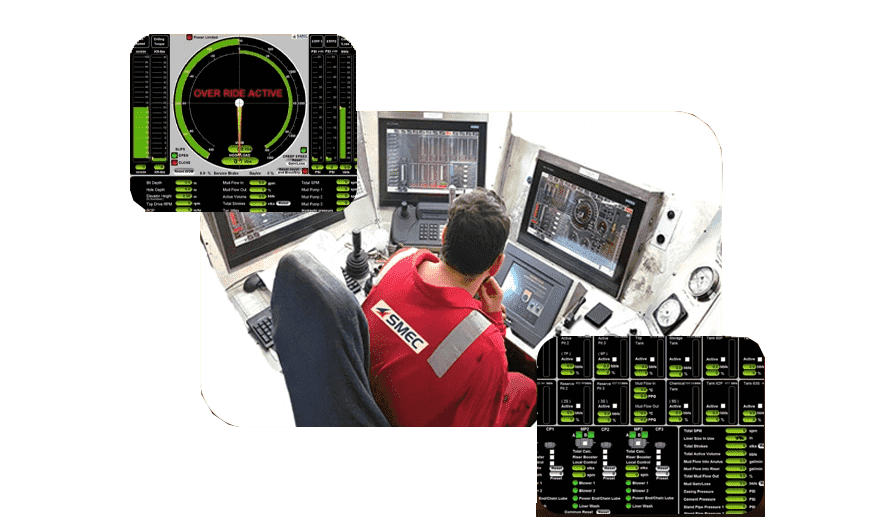 Drill Monitor SystemStay Alert, Stay Safe: Gas Watch Panel by SMECKnow More
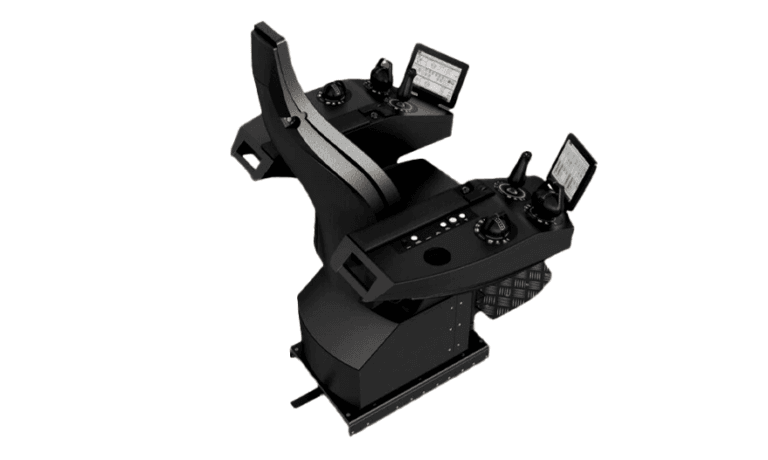 Integrated Drilling Control SystemElevate Your Drilling: Precision Meets Innovation with SMEC’s Integrated Control System!Know More
Common questions
Can Rack Phase Difference RPD System be supplied for new build, retrofit or replacement?
The lifecycle route depends on the installed base, condition, interfaces, obsolescence and project requirements. SMEC can assess new-build, retrofit, repair or replacement scope where technically valid.
Can existing field wiring or interfaces be retained?
Possibly. Retention depends on survey findings, condition, ratings, compatibility, safety requirements, documentation and the cutover strategy.
What information is required for quotation?
Send the make/model or required specification, datasheets, drawings, ratings, interfaces, fault details where applicable, site location and required date or shutdown/mobilization window.
Is RPD a standalone jacking controller?
It is primarily a monitoring/control-interface function and should be engineered with the jacking system.
Can existing position sensors be reused?
Possibly, after checking accuracy, calibration and availability.
What drawings are essential?
Jacking arrangement, sensor layouts, existing PLC architecture and OEM operating limits.
Related pages
Send the requirement
Send the available drawings, specification, make and model, site and required date. An engineer reviews the scope and replies.